Table of Contents
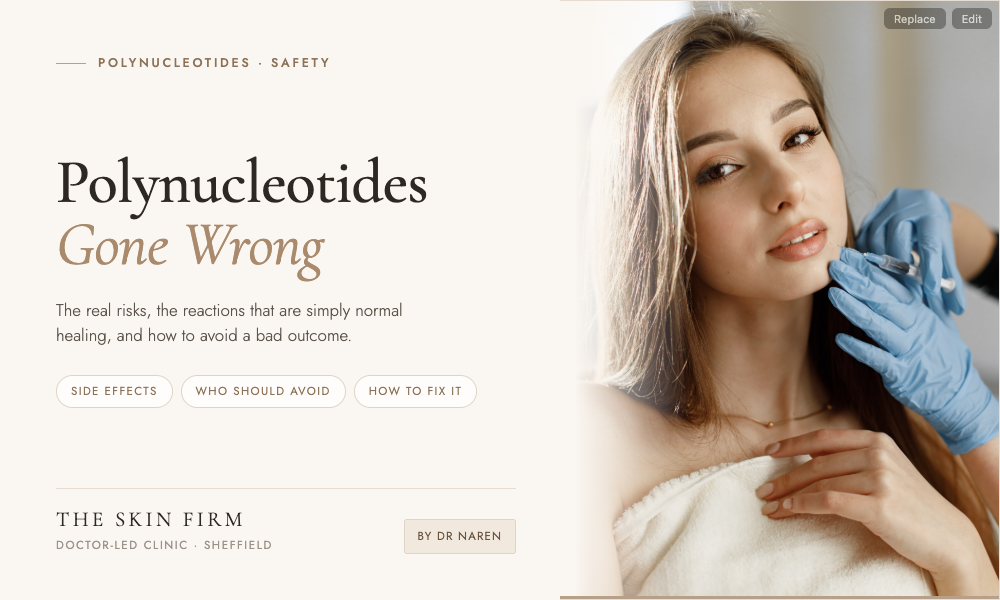
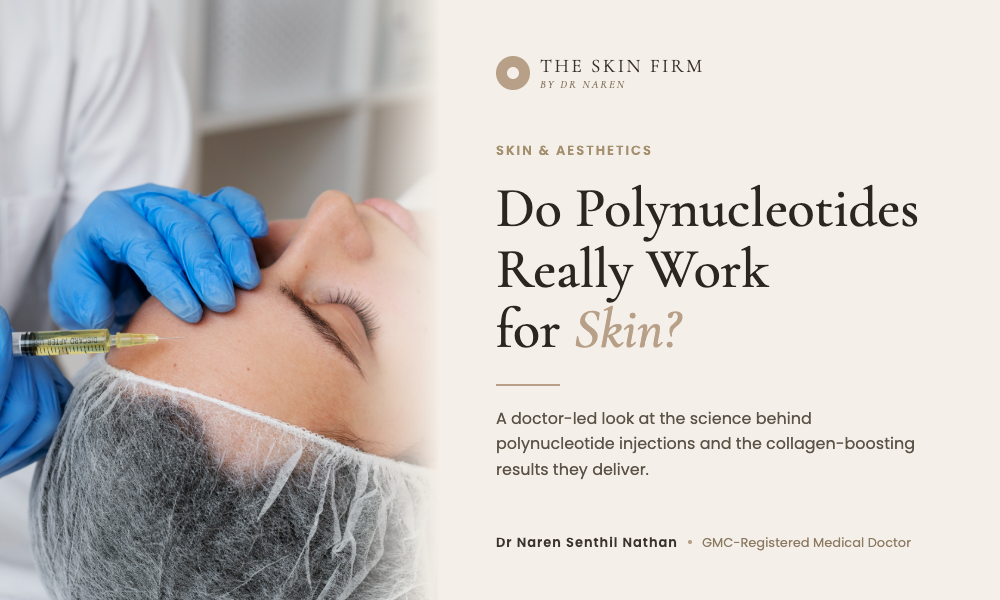
Patients keep asking the same question: Do polynucleotides actually work? Yes, they do, and the science behind them is rather strong. Polynucleotides are natural molecules derived from purified salmon DNA fragments, and they help the skin repair tissue, lift elasticity and stimulate fresh collagen production. The treatment works at the cellular level, meaning it does not just sit on the skin. It actually pushes the skin to behave like younger skin again.
However, polynucleotides should not be considered a panacea for all problems. The procedure brilliantly restores skin beauty, but it cannot fill deep depressions as a filler can. Knowing the capabilities and limitations of this method will help you set reasonable expectations and choose the best option for you.
It takes about 2 to 3 weeks after the first treatment session for the first positive changes to appear, and at 12 weeks, you will get the final result. Three to four treatment sessions, spaced 3 to 4 weeks apart, yield excellent results.
How Do Polynucleotides Work on the Skin?
Polynucleotides are often called the building blocks of DNA. When injected into the dermal layers, they switch on the skin's own repair signals. The molecules support tissue repair, boost collagen and elastin, and improve hydration from the inside.
Here is what happens step by step:
- The polynucleotide solution is gently injected into the targeted area using a fine needle or cannula.
- The skin recognises the molecules and starts a natural healing response.
- Fibroblast cells get stimulated, producing fresh collagen and elastin.
- The skin retains more moisture due to higher hyaluronic acid synthesis.
- Over weeks, texture, tone, firmness and brightness gradually improve.
Do Polynucleotides Work for Under-Eye Dark Circles?
Yes, polynucleotides are one of the most popular treatments for tired, dark under-eye areas. They reduce pigmentation, plump thin crepey skin and improve overall brightness.
Studies show that polynucleotide treatment can improve under-eye brightness by over 32 per cent in as little as 4 weeks, while increasing skin elasticity by an average of 22 per cent. That is a meaningful difference for an area that often refuses to respond to creams and serums.
However, there is one honest point worth noting:
- Polynucleotides do not fill deep tear troughs the way hyaluronic acid filler does.
- They rejuvenate the skin and subtly soften the look of hollows by plumping the surrounding tissue.
- For very deep volume loss, a tear trough filler may be the better structural option.
Many people benefit most from a careful assessment first because pigmentation, thin skin, shadowing, or volume loss can cause dark circles, and the right treatment depends on the cause.

Tired of Looking Exhausted Because of Stubborn Dark Circles?
A doctor-led assessment can identify the underlying cause of your dark circles and match the right treatment to your skin.
- Personalised plan based on your skin and anatomy
- Premium injectable products only
- Carried out by qualified medical practitioners
Do Polynucleotides Work for Acne Scarring?
Yes, polynucleotides genuinely help with acne scarring, especially when combined with the right supporting treatment. The molecules trigger tissue repair, boost collagen production, and improve overall skin texture, helping soften the appearance of pitted and uneven scars.
The best results usually come from a combined approach:
- Subcision, which physically releases the tethered scar tissue beneath the skin.
- Polynucleotide injections help the released tissue heal smoothly with new collagen.
This pairing is far more effective than either treatment alone. If you are wondering how to treat acne scarring properly, a layered approach is almost always the best route.
How Many Sessions Are Required?
For acne scars and skin texture issues, it is recommended to start with a series of 3–4 treatments, spaced 1 week apart. Following that, a booster treatment is advisable after 9–12 months. It does take time for regenerative treatments to yield their full effects.
Where Else Can Polynucleotides Be Used on the Body?
Polynucleotide therapy is not limited to the under-eye area. Doctors can use it on multiple areas where the skin needs better quality, firmness, or texture. Common treatment areas include:
- Face: Smooths crepey texture and fine lines, firms the skin, and helps with age spots, mild pigmentation, acne scarring and rosacea.
- Eyes: Reduces dark circles, fine lines, crow's feet and puffiness.
- Neck and Décolletage: Softens crepey skin and fine lines for a smoother appearance.
- Hands: Improves crepey texture and fine lines on ageing hands.
Because the product is water-like and works on a cellular level, it sits comfortably in delicate areas where thicker fillers are not suitable. Learn more about our polynucleotide treatment in Sheffield.
What Are the Benefits of Polynucleotide Treatment?
The benefits go beyond looking refreshed. Polynucleotides actively support long-term skin health. Key benefits include:
- Boosts collagen production to strengthen skin structure and reduce wrinkles.
- Aids tissue repair to enhance skin health.
- Helps reduce under-eye dark circles by decreasing pigmentation.
- Promotes cell turnover for an overall brighter complexion.
- Acts as an antioxidant defence system to combat free radicals.
- Minimal downtime, so most people return to normal life quickly.
- Long-lasting results with simple maintenance every 9 to 12 months.
This combination is what makes polynucleotides feel different from traditional aesthetic injectables. It is rejuvenation rather than just correction.
Polynucleotides vs Profhilo: Are They the Same?
Both are skin boosters, but they work differently:
- Polynucleotides are DNA fragments derived from salmon. They stimulate the body's own collagen and elastin at a cellular level. The product is water-like and does not pull water into the skin.
- Profhilo is a hyaluronic acid product. It hydrates and plumps the skin by drawing in water and spreading beneath the surface, but it does not regenerate the skin at the cellular level.
Polynucleotides can be used around the eyes and on the forehead, whilst Profhilo cannot. Doctors can use both treatments on the cheeks, neck, décolletage, and stomach. Both treatments also require an initial course followed by maintenance sessions. The right choice depends on what your skin actually needs, so a proper consultation helps doctors make the best decision instead of relying on guesswork.
Want a Treatment Plan Built Around Your Skin, Not a Trend?
Polynucleotides work brilliantly when matched to the right concern. A proper consultation with a medical doctor helps you avoid wasted sessions and unrealistic expectations.
Polynucleotides vs Tear Trough Filler: Which One Is Better?
It depends entirely on what you want to treat.
- If your concern is only deep hollows, with no puffiness, then tear trough filler is usually the better option because it physically replaces lost volume.
- If your concerns are fine lines, crepey skin, dark circles, puffiness, or eye bags, then polynucleotides are the safer, more natural choice.
Tear trough filler can sometimes make the under-eye look puffier because hyaluronic acid attracts water and can shift over time. Polynucleotides do not fill the area or migrate, so the result tends to look more natural and avoid the ‘done’ look.
What Is the Recovery Time for Polynucleotide Treatment?
The recovery process depends on the method chosen:
- Cannula method: The recovery period is normally short, ranging from 12 to 24 hours.
- Needle method: Bumps (blebs) may develop at the injection site and typically resolve within 2 to 3 days.
Mild redness, light bruising or tenderness can occur, but these are short-lived. Most people return to their normal daily lives very quickly, which is why this treatment fits well into busy routines.
Is Polynucleotide Treatment Safe? Risks and Candidacy
Polynucleotides have an excellent safety profile. Because they are derived from purified salmon DNA fragments and work with the body's own repair systems, the risk of allergic reaction or rejection is very low.
Suitable Candidates Include
- People who want to improve skin elasticity and firmness.
- Anyone looking to reduce fine lines and crepey skin.
- Those wishing to treat dark circles, mild pigmentation or acne scarring.
- Anyone seeking a regenerative approach to overall skin quality.
Not Suitable For
- Pregnant or breastfeeding women.
- Anyone with a fish or shellfish allergy.
- Vegans, since the product is animal-derived.
- Anyone with active skin infections in the treatment area.
A proper medical consultation is the only reliable way to confirm whether this treatment is right for your skin.
How Long Do Polynucleotide Results Last?
Results typically last 9 to 12 months, depending on factors such as:
- Individual metabolism and skin type
- Lifestyle, diet and hydration
- Sun exposure and skincare routine
- Maintenance sessions
A single maintenance treatment every 9 to 12 months is generally enough to keep the skin looking refreshed and supported.
Conclusion
Do polynucleotides have any effect? Yes, they provide reliable, scientifically backed results for dark circles, fine lines, crepe skin, acne scars, and general skin conditions, without surgery or downtime. Doctors should explain one simple fact upfront: polynucleotides rejuvenate the skin but do not add volume, so deep hollows require a different solution.
The advantage of this procedure is that it works through skin regeneration. It respects the skin's natural function, improves skin condition over time, and produces natural results when applied correctly. The key components in this case are proper diagnosis and an individualised treatment protocol.
If you would like a clear, doctor-led plan for your skin concerns, the medical team at The Skin Firm offers expert polynucleotide treatment in Sheffield tailored to your unique needs.
Start Your Journey
Book Your Free Consultation Today
FAQs
Do polynucleotides really work for dark circles?
Yes. Polynucleotides reduce pigmentation, improve thin under-eye skin and increase brightness. Studies show improvement of over 32 per cent in under-eye brightness in as little as 4 weeks.
Will polynucleotides fix deep under-eye hollows?
No. Polynucleotides regenerate your skin but do not plump up any deep tear troughs. If you have substantial tissue loss, then a tear trough filler might be better suited for you.
Does the procedure hurt?
Polynucleotide injections can sting a little bit. However, topical anaesthetic cream can reduce this.
How long will my polynucleotide effects last?
The results will last for about 9 to 12 months, depending on individual factors.
What is the downtime from polynucleotide treatment?
If doctors use a cannula, downtime may last 12 to 24 hours. If they use a needle, the swelling usually goes away within 2 to 3 days.