Table of Contents
How to get rid of hyperpigmentation on the face depends on the cause. Dark patches, uneven skin tone, and stubborn spots are all signs of hyperpigmentation, and the good news is that effective treatments like Cosmelan, chemical peels, and advanced skin resurfacing are available for all skin types and tones.
Hyperpigmentation happens when certain areas of the skin make too much melanin. Sun exposure, hormones, acne scars, or skin inflammation can cause it. It's very common but not harmful to your health.
Whether you are looking for a professional procedure or want to start with at-home skin pigmentation remedies, this guide walks you through everything in plain language.
Key Takeaways
- Hyperpigmentation happens when the skin produces too much melanin in certain areas.
- Sun exposure, hormones, and acne marks are the most common triggers.
- Professional options like Cosmelan, chemical peels, and microneedling help fade stubborn patches.
- Daily sunscreen protects your results and stops dark spots from returning.
How Can You Get Rid of Hyperpigmentation on the Face?
You can get rid of hyperpigmentation on the face by matching the treatment to what caused your dark patches in the first place. Mild surface spots often fade with brightening skincare and daily sun protection, while deeper or hormonal pigmentation usually needs professional care such as chemical peels or a medically supervised depigmentation programme. A skin assessment with a qualified practitioner is the quickest way to find the safest option for your skin type and tone.
What Causes Hyperpigmentation on the Face?
Before choosing any treatment for facial hyperpigmentation, it helps to understand the cause. Different types respond to different treatments.
- Sun damage (solar lentigines): Dark spots caused by UV exposure, usually on the cheeks, forehead, and nose.
- Melasma: Dark, even patches on the upper lip, cheeks, or forehead caused by hormones. It's common in women, especially during pregnancy or when using birth control pills.
- Post-inflammatory hyperpigmentation (PIH): Dark spots that form after acne, eczema, or skin injuries.
- Freckles: Genetic and sun-triggered small spots that deepen with UV exposure.
Identifying your type is the first step. A skin assessment with a qualified professional makes this much easier.

Still Struggling With Stubborn Dark Patches?
Home treatments usually work only a little. If the problem persists, see a doctor for a skin check to identify the cause and receive the right treatment.
Treatment for Hyperpigmentation on Face: What Professionals Offer
When over-the-counter products are not delivering results, professional treatment for facial hyperpigmentation offers more targeted, faster results. These are the most commonly used in clinical settings:
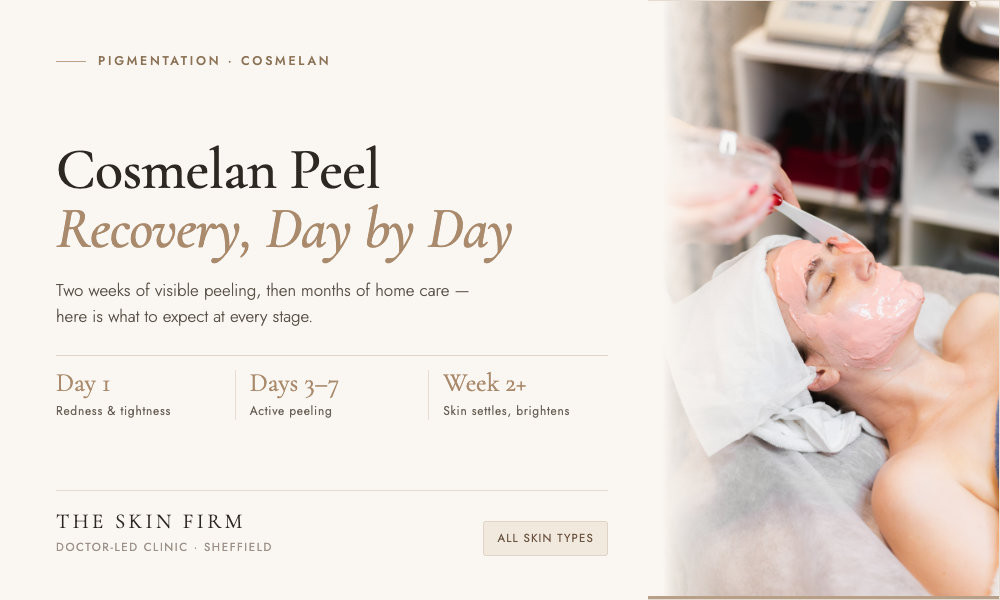
Cosmelan Treatment
Medical professionals apply this advanced, intensive Cosmelan depigmentation mask directly to the skin to actively block melanin production at its source. Following the initial application in the clinic, patients strictly adhere to a specialised homecare routine to maintain fading and prevent the pigment from returning.
- Best for: Severe melasma, highly stubborn dark spots, and deep sun damage.
- Downtime: 7 to 10 days of heavy peeling, redness, and skin sensitivity.
- Results: Dramatic fading of deep pigmentation, typically highly visible within 3 to 4 weeks.
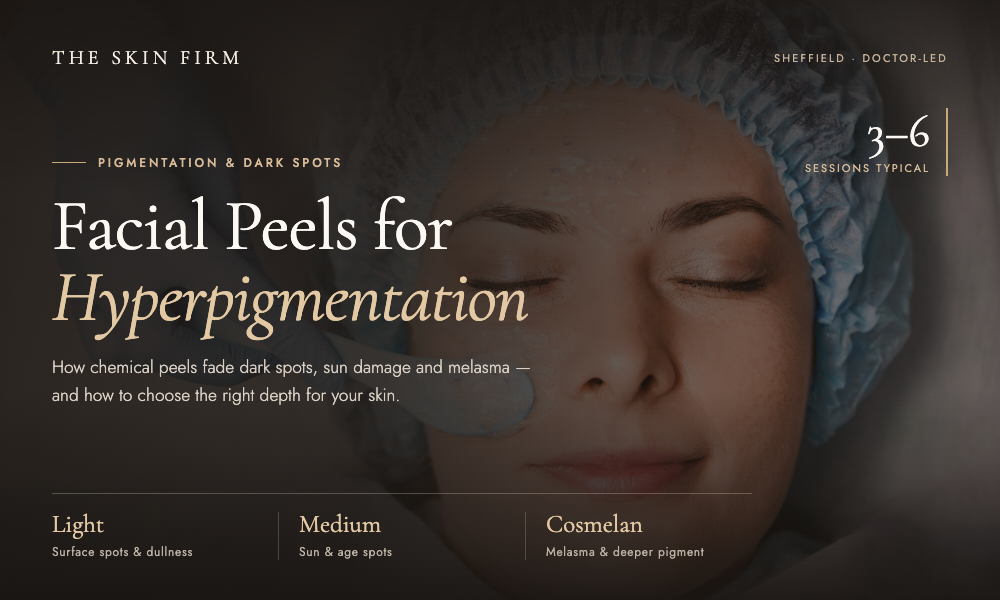
Chemical Peels
The use of chemicals on the skin peels off the outer layer, exposing new, even skin underneath. While shallow peels remove only the outer layer, medium peels penetrate further into the skin.
- Good for: Acne scarring, UV damage, and melasma.
- Recovery time: Low to moderate, based on the type of peel.
- Outcome: Slow and steady, after 3-6 treatments.
Advanced Skin Resurfacing
Energy-based treatments break up pigment in the skin without harming the surrounding tissue. Fractional lasers and Q-switched ND: YAG lasers work especially well for deeper pigmentation.
- Best for: Sun spots, freckles, and post-inflammatory hyperpigmentation.
- Downtime: 3-7 days of redness and mild peeling.
- Results: Visible improvement after 1-3 sessions.
Microneedling with Brightening Serums
These tiny channels allow brightening agents to reach deeper layers of the skin, giving the best results. The combination treatment helps improve both skin texture and skin tone. Beyond pigmentation, the wider benefits of microneedling include smoother texture and firmer skin.
- Suitable for: Acne scars, dark spots, and dull skin.
- Recovery: Usually takes 24-48 hours of redness.
- Result: You can see gradual improvement over 4-6 weeks.
Obagi Nu Derm Rx System
Obagi Nu-Derm Rx System uses prescription-strength ingredients such as hydroquinone and tretinoin, which are stronger than those in over-the-counter creams. This is due to their stronger formulation, which requires medical supervision for use.
Quick Comparison: Pigmentation Treatments at a Glance
| Treatment | Best For | Downtime | Sessions |
|---|---|---|---|
| Vitamin C / Niacinamide | Mild surface spots | None | Daily / 8-12 weeks |
| Chemical Peel | Sun damage, PIH | 1-5 days | 6 |
| Advanced Skin Resurfacing | Deep pigmentation | 3-7 days | 1-3 |
| Microneedling | Acne scars, uneven tone | 24-48 hrs | 4-6 |
| Obagi Nu Derm Rx System | Melasma, stubborn pigmentation | None | 8-16 weeks |
5 Natural Remedies to Reduce Hyperpigmentation
Hyperpigmentation occurs when excess melanin produces dark spots, and natural home remedies can gradually lighten them safely.
- Aloe Vera Miracle: Let aloe vera treat your skin condition and lighten those dark patches by applying fresh aloe vera gel directly to the patches, letting it sit for 30 minutes, then rinsing it off.
- Lemon Juice Treatment: Utilise the natural bleaching abilities of lemon juice to lighten those dark spots. Simply dab a little on, then let it sit for 10-15 minutes before washing it off. You might want to moisturise afterwards since lemon juice dries out the skin.
- Turmeric Mask: Mix turmeric powder with some milk to form a paste, then apply it to the hyperpigmented areas. Leave it on for 15-20 minutes before washing it off. Turmeric's anti-inflammatory attributes are beneficial for skin lightening.
- Green Tea Remedy: Allow the green tea you just brewed to cool, then apply it to the hyperpigmented areas using a cotton ball. Green tea is rich in antioxidants and therefore reduces pigmentation.
- Papaya Paste: Grind some ripe papaya and apply the paste to the skin, leave it on for 20-30 minutes, then rinse it off.
Effective Skin Pigmentation Remedies You Can Try at Home
For mild hyperpigmentation, consistent use of targeted skincare ingredients can make a visible difference over time. Here are the most effective skin pigmentation remedies to include in your routine:
- Vitamin C Serum: One of the most researched brightening ingredients, vitamin C inhibits melanin production and fades existing dark spots. Apply it in the morning under SPF for best results.
- Niacinamide: A derivative of vitamin B3 that inhibits the transfer of pigment into skin cells. It is also effective in reducing redness and improving skin barrier function. Safe for everyday use.
- AHAs and BHAs: Chemical exfoliants such as glycolic acid (AHA) and salicylic acid (BHA) remove dead skin cells, thereby accelerating fading of dark patches on the surface.
- Retinoids: Retinol and prescription retinoid tretinoin stimulate cell turnover, pushing pigmented cells to the surface, allowing them to be exfoliated more quickly.
- SPF - The Must-Have Ingredient: Nothing will work unless you protect yourself from harmful UV rays. Sun exposure aggravates any type of hyperpigmentation.
Effective Ways to Treat Different Types of Skin Pigmentation
Not all pigmentation responds to the same approach. Here is how treating skin pigmentation differs based on the type:
Treating Melasma
Hormones drive melasma, making it one of the trickiest forms of pigmentation. Light-based treatments alone can sometimes worsen it. The most effective approach is either Cosmelan or the Obagi Nu Derm Rx System, along with strict sun protection.
Treating Post-Acne Marks (PIH)
The PIH condition responds favourably to chemical peeling and brightening serum. In a clinic setting, microneedling with vitamin C or a series of chemical peels will significantly fade PIH.
Treating Sun Damage and Age Spots
One treatment that works very effectively for sun spots is advanced skin resurfacing. This treatment works well because it breaks down the melanin without damaging the surrounding area.
Not Sure Which Treatment Is Right for You?
Every skin tone and pigmentation type is different. The expert practitioners at The Skin Firm provide a full skin assessment to recommend the most effective, safest treatment plan, personalised to you.
What Gets Rid of Hyperpigmentation Fastest?
If you are wondering what gets rid of hyperpigmentation the fastest, the honest answer is: a combination approach. No single product or treatment removes pigmentation overnight, but pairing professional treatments with a good home routine significantly speeds up results.
Most effective outcomes can be achieved by:
- Advanced light therapy (1-3 treatments for sunspots)
- Chemical peeling (courses of 6 for darker pigmentations)
- Prescribed creams applied continuously along with in-office procedures
- Sunscreen application every day to ensure pigmentation doesn't reappear
Consistency matters more than speed. People usually don't see lasting results when they stop treatment too soon or skip sunscreen.
How Long Does It Take to See Results?
The results will depend on the nature of the pigmentation, skin colour, and type of therapy chosen. Here is an estimated timeline for each method:
- Cosmetic products such as vitamin C and niacinamide: 8 to 12 weeks
- Chemical peels: Visible changes after 2 to 3 sessions (with 4 weeks between each session)
- Advanced light therapy: Fading within 2 to 4 weeks after the procedure
- Microneedling: Optimal results in 4 to 6 sessions spaced 4 weeks apart
Patience is key. Pigmentation that has built up over months or years will not disappear in a week. Realistic expectations and professional guidance set you up for success.
Can Hyperpigmentation Come Back?
Yes, especially if the root cause is not addressed. Sun exposure is the biggest trigger for recurrence. Even after successful treatment, hyperpigmentation can return if you skip SPF.
For hormonal pigmentation like melasma, ongoing skincare maintenance and periodic professional treatments are often necessary to keep it under control over the long term.
Conclusion
Eliminating hyperpigmentation from your face requires understanding your skin's specific needs and selecting the best products to address them. Whether you require sunscreen or Vitamin C, there are plenty of facial procedures, such as advanced light therapy or chemical peels, that can help with hyperpigmentation.
The key is consistency and getting expert guidance early so you do not waste time on treatments that are not suited to your skin type. The specialists at The Skin Firm offer comprehensive skin pigmentation and melasma treatment, helping you achieve clearer, more even-toned skin with a plan tailored to you.
Start Your Journey
Book Your Free Consultation Today
Frequently Asked Questions
What is the most effective treatment for hyperpigmentation on the face?
The best way to treat facial hyperpigmentation depends on what's causing it and how deep it is in the skin. Advanced skin resurfacing works well for sun spots, while the Cosmelan / Obagi Nu Derm Rx System is often recommended for melasma, and a course of microneedling / chemical peels is often recommended for post-acne marks. A professional assessment will identify the best option for your skin.
Is there a way to remove hyperpigmentation forever?
Yes, in most cases, particularly for surface-level dark spots from the sun or acne marks. Hormonal pigmentation, such as melasma, may require continuous care. Following a consistent routine and using sunscreen daily can yield lasting results.
Are there home remedies that actually work for skin pigmentation?
Some at-home remedies can help with mild skin pigmentation. Ingredients like Vitamin C, niacinamide, AHAs, and retinoids are proven to work. Results take time, usually 8-12 weeks, and it's important to use sunscreen every day.
Does sunscreen help with hyperpigmentation?
Sunscreen is essential, not just helpful. UV exposure triggers and worsens all types of hyperpigmentation. Wearing SPF 30 or higher every day prevents new dark spots from forming and prevents existing ones from deepening, making other treatments more effective.