Table of Contents
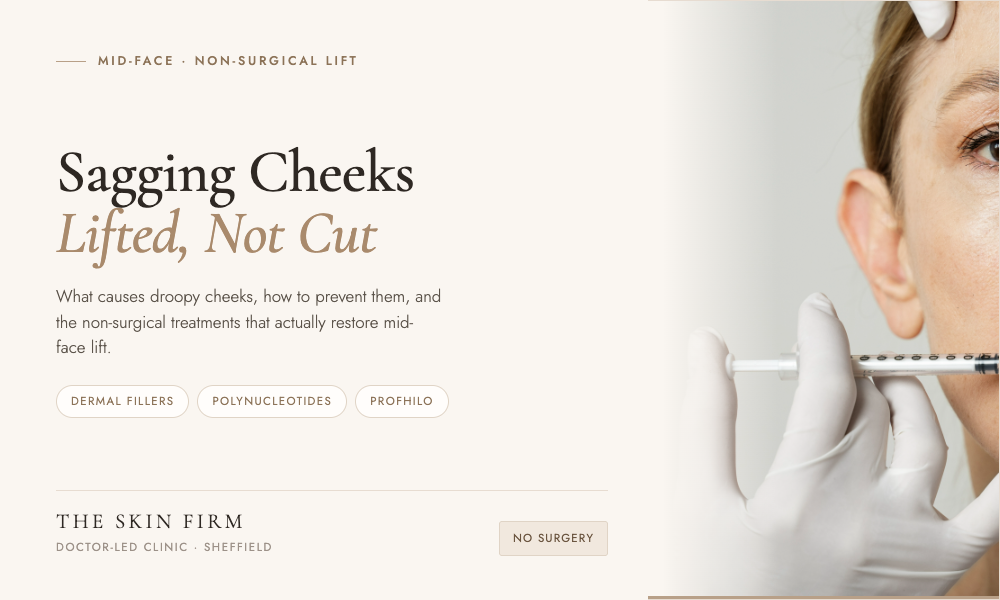
Sagging skin occurs when the deep support layers of the face lose volume, collagen, and elasticity, allowing the tissue to sag along the cheeks, jaw, and neck. A proper sagging skin treatment focuses on two things at once: replacing the volume the face has lost and providing the soft tissue with physical support so it sits higher again. Modern non-surgical sagging skin solutions use precise injectable techniques and skin-quality treatments to lift jowls, redefine an undefined jawline and improve overall skin firmness.
This guide explains the types of facial sagging, the main causes of saggy facial skin, and the doctor-led options that actually work, so readers can make an informed decision without jumping straight into surgery.
What Is Sagging Skin?
Sagging skin is a term used to describe the drooping of facial skin tissue due to the changes that occur underneath the skin's surface. Fat pad loss, slight bone loss, muscle loss, and less production of collagen and elastin in the skin all contribute to sagging skin.
People usually notice it in three ways:
- The cheeks look flatter and lower.
- A heavy fold or jowl forms along the jaw.
- The neck looks looser, with vertical bands or a softer profile.
The good news is that loose skin on the face is no longer only a surgical question. Doctor-led aesthetic medicine offers safe, effective ways to lift and refirm the face without going under the knife.
What Are the Types of Sagging Skin?
Facial sagging does not look the same on everyone. Expert practitioners usually group it into a few clear patterns so the treatment can match the problem.
1. Sagging Cheeks (Mid-Face Descent)
The cheek fat pads slip downwards, flattening the upper face and deepening the lines around the mouth. The mid-face looks tired, and the cheekbones lose definition.
2. Jowls and an Undefined Jawline
Loose tissue gathers below the jaw, breaking the sharp line that once ran from ear to chin. It is the most common reason people search for a way to fix an undefined jawline.
3. Platysmal Bands and Neck Laxity
Two vertical muscle bands run down the front of the neck. With age, they tighten and pull the lower face downward, making the jowls and chin look even heavier.
4. Loose Skin Around the Eyes and Brow
The brow drops, the upper eyelid feels heavier and fine crepey skin appears. It often pairs with the mid-face changes above.
What Are the Main Causes of Saggy Facial Skin?
Skin does not start sagging for one single reason. Several factors build up over time, and most people experience a mix of them. Key causes include:
- Natural ageing and volume loss: Bone, fat and muscle all shrink with age, so the skin has less to sit on.
- Collagen loss and sagging skin: From the mid-twenties onwards, the body produces about 1% less collagen each year, weakening the skin's internal scaffold.
- Sunlight exposure: Ultraviolet light causes collagen and elastin fibres to deteriorate much more quickly than they do with natural ageing.
- Smoking and air pollution: Both release free radicals, which attack proteins that support the structure.
- Sudden weight loss: Skin does not always contract to accommodate the smaller body size.
- Genetics: Skin thickness, fat distribution and bone structure are inherited.
- Poor diet and dehydration: Low protein, low vitamin C and low water intake all slow collagen repair.
- Inappropriate jaw slimming injections: In older patients, weakening the jaw muscles can cause the tissue to sag further, making jowls look worse. Skilled practitioners recommend jaw slimming only in specific cases, such as teeth grinding.
Understanding collagen loss and sagging skin matters because it points directly to the treatments that work: those that either replace volume, stimulate new collagen, or do both.
Tired of Watching Your Jawline Fade in the Mirror?
A doctor-led plan can lift sagging cheeks, soften jowls and redefine your jawline safely, without surgery.
- Bespoke assessment of your facial anatomy
- Premium products, adequate volumes, real results
- Natural-looking lift you can trust
Symptoms: How to Tell if You Have Sagging Skin
Most people spot the early signs themselves. Common symptoms include:
- A more softened jawline
- The development of jowls on the lower face
- Depressed or flattened temples/cheeks
- Darker or deeper nasolabial folds and marionette lines
- Sagging skin or creases on the neck
- A heavy appearance even when well-rested
- Thinning and less elastic skin
If two or three of these sound familiar, a professional consultation is the simplest next step.
How Does Skin Sagging Actually Happen?
Skin sits on top of fat, muscle and bone. Each of these layers supports the one above it.
- The bone shrinks slightly with age, especially around the jaw and eye sockets.
- Fat pads slide and shrink, so the cheeks lose height and roundness.
- Muscles lengthen or tighten in the wrong direction, pulling the face downwards.
- Collagen and elastin drop, so the skin can no longer snap back.
- The skin's surface thins, which makes the underlying changes more visible.
Effective treatment has to address more than one of these layers. That is why a single quick-fix injection rarely delivers a real lift.
Facial Sagging Prevention: Habits That Genuinely Help
Though it's impossible to halt the process of ageing, maintaining a good routine will noticeably delay sagging. A great approach to preventing facial sagging is to preserve collagen and maintain skin health. A routine for preserving one's face from sagging:
- Apply sunscreen daily.
- Incorporate a vitamin C serum into the morning routine to help combat free radicals.
- Incorporate a retinoid at night to promote collagen synthesis.
- Ensure adequate hydration and maintain a diet rich in protein, vitamin C, and omega-3 fatty acids.
- Maintain a smoke-free life.
- Drink alcohol responsibly.
- Try sleeping on one's back to prevent lines from forming.
These steps will not reverse existing laxity, but they will slow new damage and help in-clinic treatments last longer.
Best Treatment for Sagging Skin: Non-Surgical Solutions
The best treatment for sagging skin depends on the area, the severity and the patient's skin quality. Real lifting requires adequate product volumes and a holistic plan, not a single tiny injection.
1. Non-Surgical Face Lift (Full Face Rejuvenation)
The non-surgical facelift uses premium dermal fillers placed in key areas of the mid-face to lift sagging tissue physically. This treatment helps to:
- Lift and contour — restore volume in the cheeks, temples and jawline for a sculpted appearance.
- Revitalise — soften smile lines, lines around the mouth and under-eye hollows.
- Harmonise — balance the mid- and lower face for a natural, refreshed look.
| Time needed for procedure | 60–120 minutes |
| Pain factor | Moderate, using local anaesthetic cream |
| Visible results | Immediate |
| Time to recover | 24 hours |
| Time effects last | 12–18 months |
2. Non-Surgical Neck Lift
Non-invasive neck lifting is done on the lower face and neck simultaneously. It smooths the platysma muscles so they no longer drag the face down, whereas a jaw lift reshapes the lower face. The procedure is very effective for those with jowls and neck bands.
3. Dermal Fillers for Structural Lifting
Dermal fillers restore volume exactly where the face has lost it. Properly treating jowls and an undefined jawline usually needs 2 ml or 3 ml of filler, placed precisely along the bone — not tiny, subtle amounts that fail to lift.
4. Polynucleotide Treatment (Collagen Booster)
Polynucleotides are high-end injectables that help repair your skin from the inside. They act on fibroblasts, increase collagen production, and tighten your skin, making them ideal when you have lost collagen and your skin sags, particularly around your face, neck, and eyes.
5. Profhilo (Skin Booster / Hydrator)
Profhilo works its way beneath the skin, hydrating and stimulating elastin and collagen production. It is one of the most successful treatments for facial skin tightening, especially when the skin is lax around the cheekbones, jaw, and neck.
6. SkinPen Microneedling
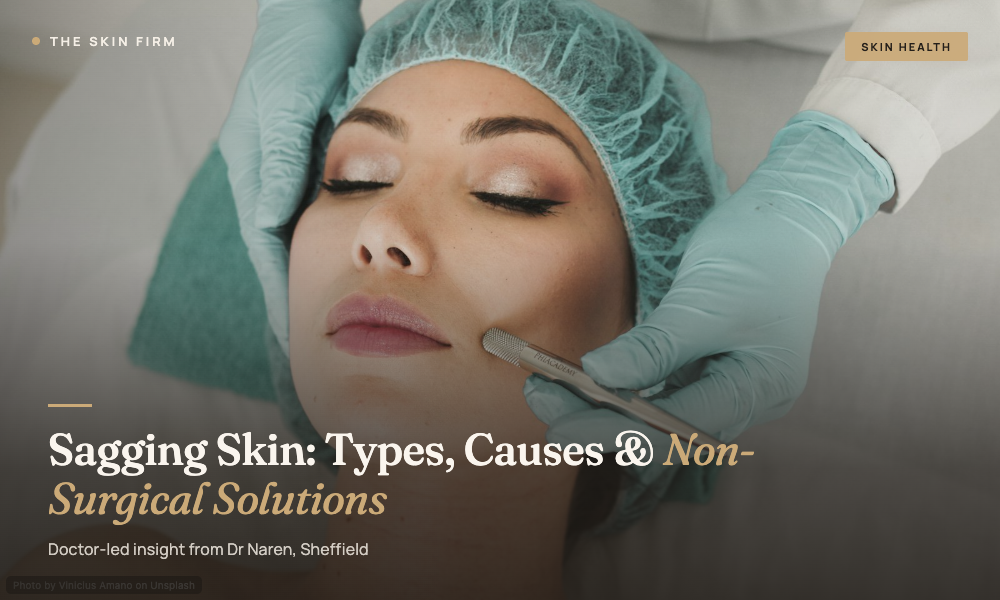
The SkinPen procedure uses a technique that creates microscopic holes in the skin to activate the body's natural healing processes and promote the formation of new collagen and elastin. This is a great way to boost the anti-ageing aspect of skincare.
7. Exosomes and Advanced Skin Repair
Exosomes contain high concentrations of growth factors that help accelerate recovery and enhance collagen production, resulting in younger-looking skin.
8. Anti-Wrinkle Treatment for Platysmal Bands
Anti-wrinkle treatment in the platysmal bands relaxes the muscles that pull the neck down. When combined with a jaw lift, this approach is often called a Nefertiti-style neck lift and produces a more defined lower face.
Sagging Cheeks, Jowls or a Soft Jawline Holding You Back?
Real lifting needs real expertise, premium products, precise placement and an honest plan made for your face.
Who Is a Good Candidate?
Non-surgical sagging skin solutions suit a wide range of people, but a careful assessment is essential. Good candidates usually:
- Have mild to moderate skin laxity
- Notice volume loss in the cheeks, temples or jawline
- Want a refreshed, natural appearance, not a done look
- Are in general good health
- Have realistic expectations about results
This treatment is not suitable during pregnancy, breastfeeding, active skin infection, or certain medical conditions, so a medical consultation is always important.
How to Prepare for Your Consultation
A few simple steps help patients get the most out of their appointment:
- Arrive with clean skin, free of heavy make-up.
- Write down your main concerns: jowls, cheeks, jawline, neck, etc.
- List any medications, supplements and previous aesthetic treatments.
- Avoid alcohol and blood-thinning supplements (such as fish oil and high-dose vitamin E) for 48 hours beforehand.
- Bring photographs of yourself from a few years ago if you have them.
Risks and Side Effects to Know
Like any medical procedure, non-surgical lifting carries some risks. Most are mild and temporary, but patients should know what to expect. Possible side effects of dermal filler-based treatments include:
- Bruising, swelling, redness or tenderness
- Minor asymmetry, which can be corrected with additional filler
- Allergic reaction (rare)
- Infection (rare)
Choosing a doctor-led clinic significantly reduces these risks because the practitioner understands facial anatomy, vascular safety and complication management.
When to Get Checked Sooner
Patients should seek a professional review urgently if they notice:
- Suddenly, one-sided drooping of the face
- Rapid swelling, severe pain, or changes in skin colour after an injection
- Visible lumps that grow or feel hot
- Skin that looks white or grey after a procedure
How Long Do Results Last?
Various therapies provide various time spans:
| Facial lift without surgery with fillers | 12 to 18 months |
| Profhilo treatment | About 6 months, but a top-up is advised |
| Polynucleotide therapy | Gradually achieved in weeks to months |
| SkinPen Microneedling | Gradual improvement up to 3 to 6 months with sessions |
| Platysmal band anti-wrinkle treatment | 3 to 4 months average time span |
Generally, combined therapy yields better, more prolonged effects than individual therapy.
Conclusion
Sagging skin is a normal part of ageing, but it does not have to be accepted as it appears. The most effective approach combines volume replacement, structural lifting and collagen-boosting treatments tailored to each patient's face. With the right plan, jowls soften, the jawline regains definition, the cheeks return to their place, and the skin itself looks firmer and healthier.
If you are exploring non-surgical solutions for sagging skin and want a doctor-led assessment, the expert team at The Skin Firm offers bespoke non-surgical facelift treatments and skin-quality therapies tailored to your unique anatomy.
Start Your Journey
Book Your Free Consultation Today
FAQs
What is the best treatment for sagging skin without surgery?
Treatment options will vary based on geography and degree of severity. However, the best approach will use fillers alongside skin-quality boosters such as Profhilo, polynucleotides, or microneedling.
How can I tighten loose skin on my face naturally?
These include applying sunscreen, using a vitamin C serum, taking retinoids at night, staying properly hydrated, consuming protein, and quitting smoking. While individually none of these can reverse skin sagging, collectively they protect against its progression.
At what age does facial sagging usually start?
Most individuals will experience these early signs of ageing in their mid-thirties, when collagen levels have decreased, and fat pads have begun to shift.
Do non-surgical facelifts hurt?
A moderate level of discomfort. The patient will be asked to use an anaesthetic cream before the treatment, and patients can handle this very well.
How long is the downtime after a non-surgical facelift?
A day or two. It's normal for mild swelling and bruising to occur after the treatment.